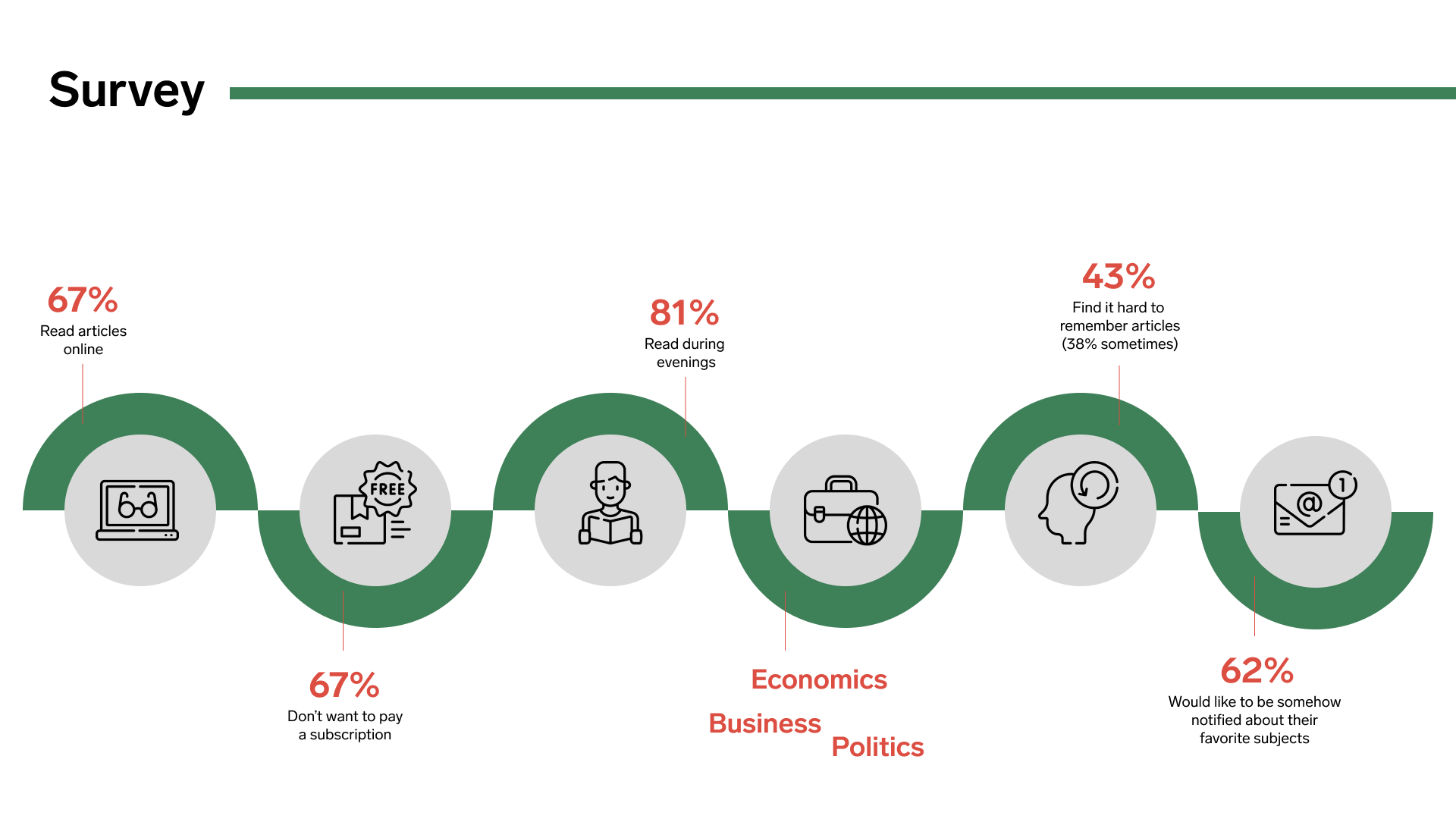
We wanted to find out more about our possible target group, in order to make our persona more complete and understand his needs more deeply. For this reason we conducted a survey, and the results higlighted some interesting aspects:
67% of participants read articles online
67% don’t want to pay for a subscription
81% read in the evenings
The topics they prefer are economics, business and politics
43% find it hard to remember the articles
62% would like to be notified about articles on their favourite subjects
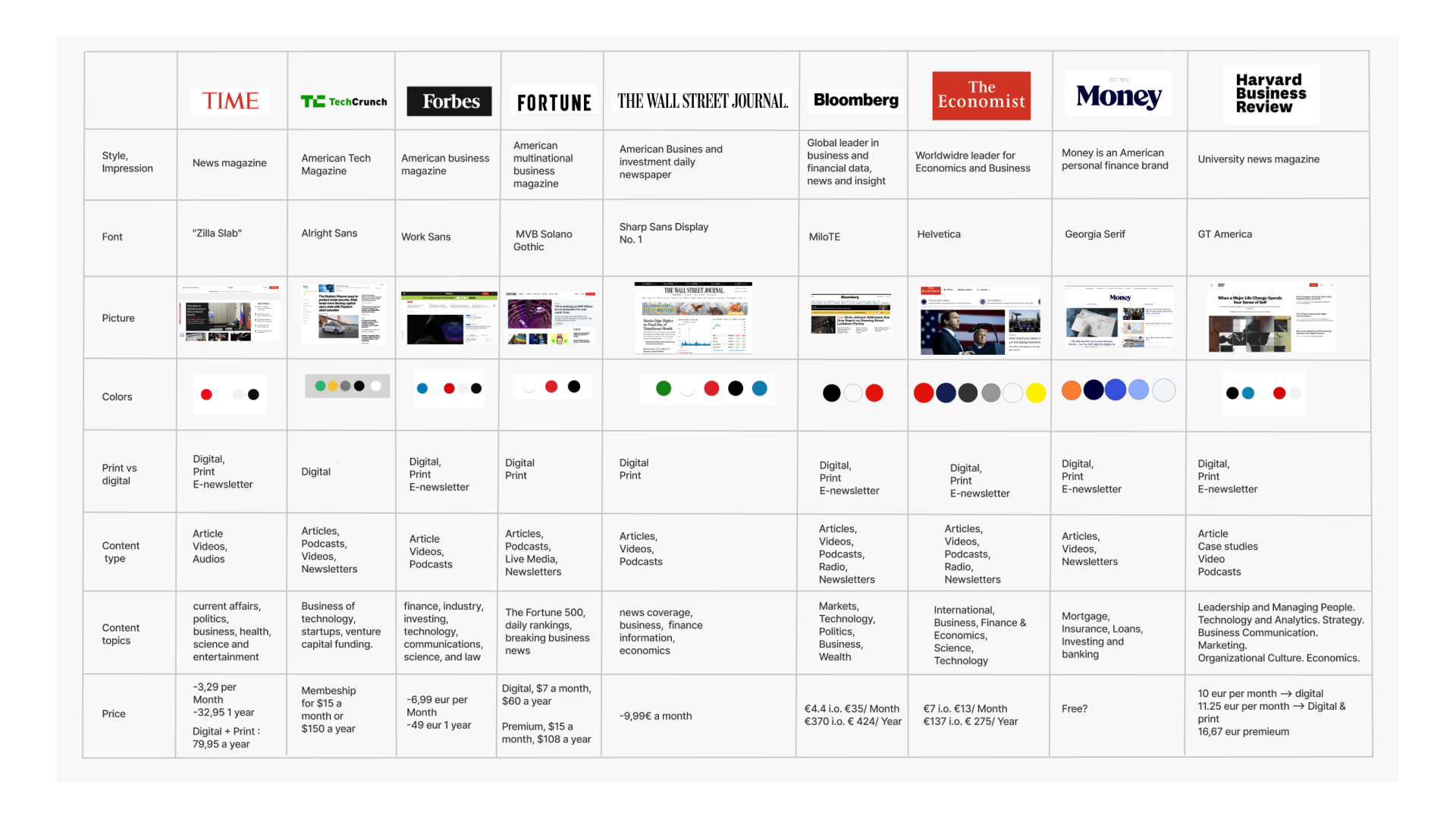
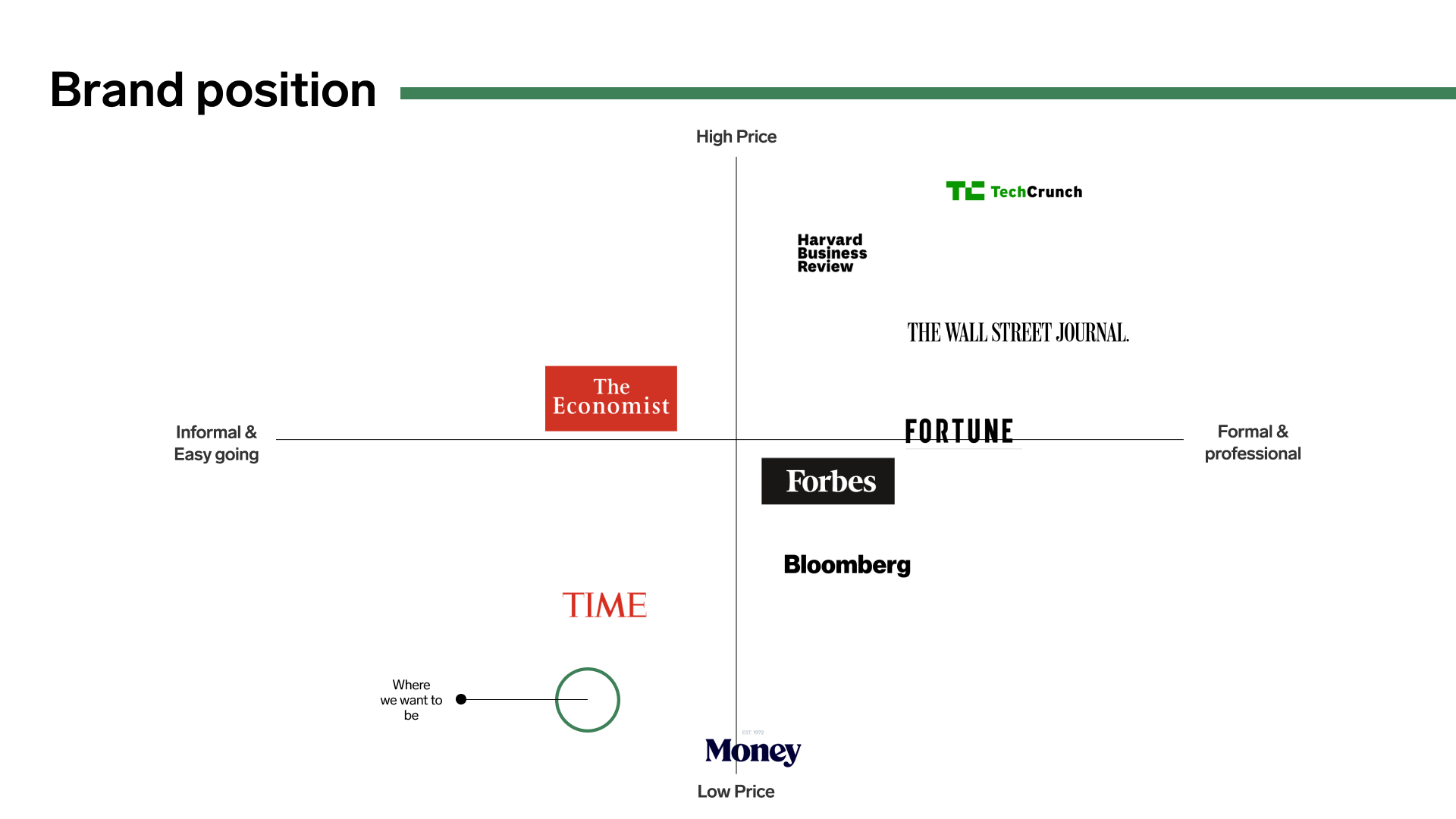
In our business analysis we took into consideration well known economics and business magazines, we checked the average price for their online subscriptions, studied their colours, styles, fonts and finally, we created the table below. As the majority of our respondents said that they were not ready to pay for an online magazine, we wanted to position ourselves among the cheaper offerers, with a free and a paid — but not expensive — option for those who wanted more features. We also wanted to give a “fresh”, younger look to our magazine.
With these findings we created a new, well rounded version of our persona. We already knew that they were passionate about business and would read articles about this topic. Through our search we could add many more details and have a clearer idea of who our user was.
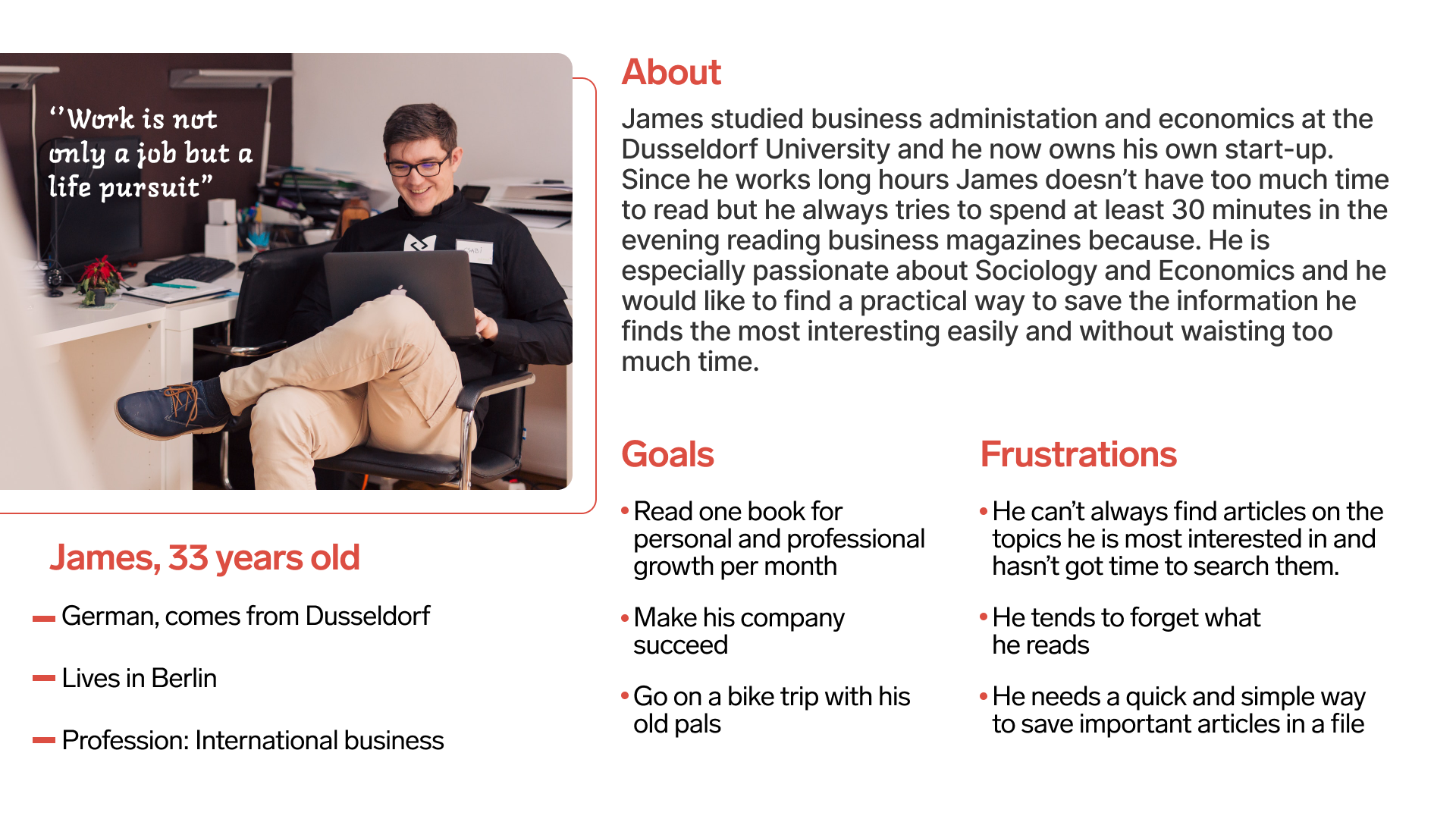
James is a 33 year-old man who lives in Berlin and works in International Business
He has founded his own start-up and wants his business to succeed
He tries to read at least 30 minutes a day, usually in the evenings
James wants to find the most interesting articles quickly, but can’t always find them
He needs a simple, quick way to save interesting articles in a file
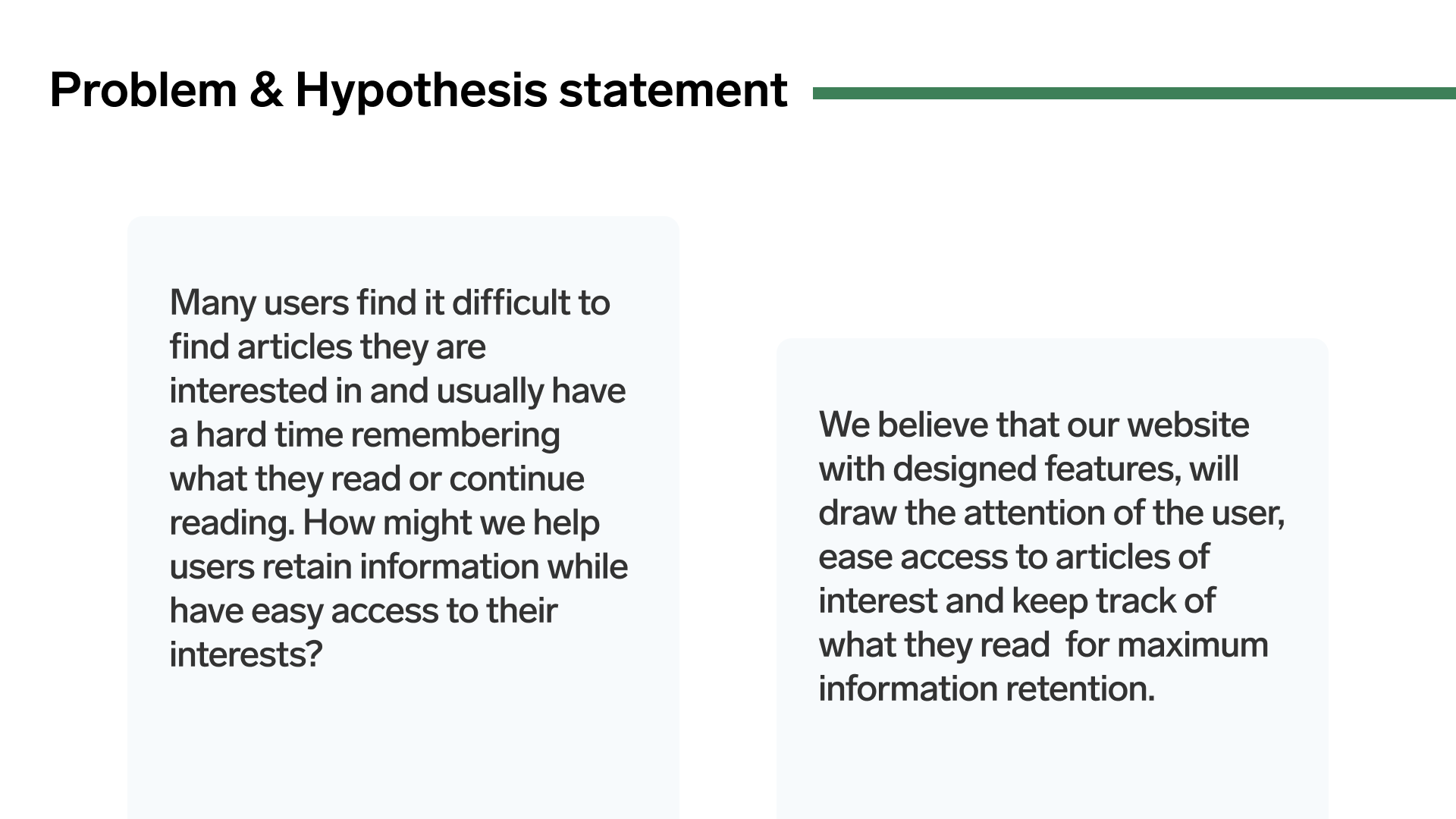
We then wrote our Problem and Hypothesis Statements.
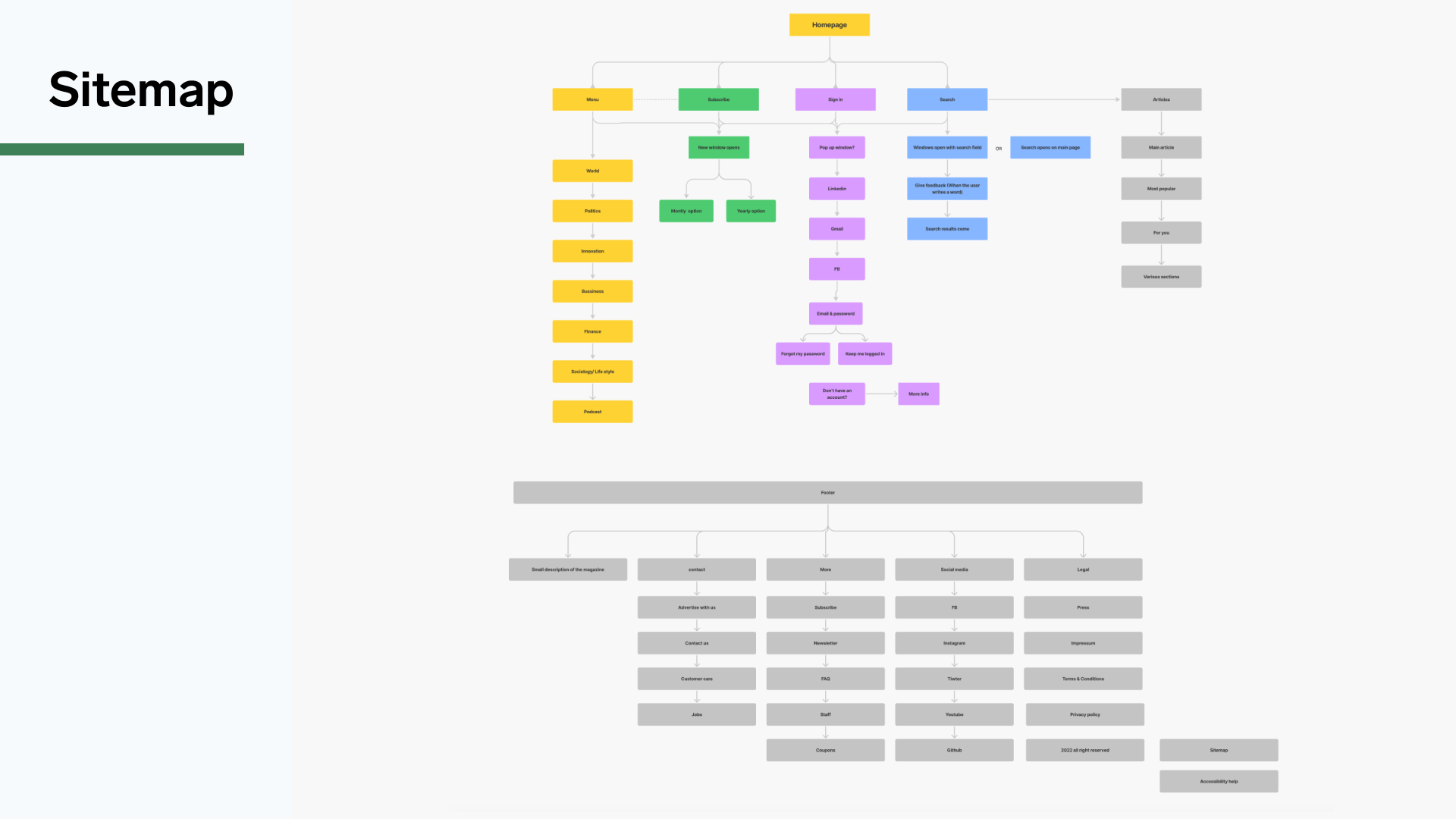
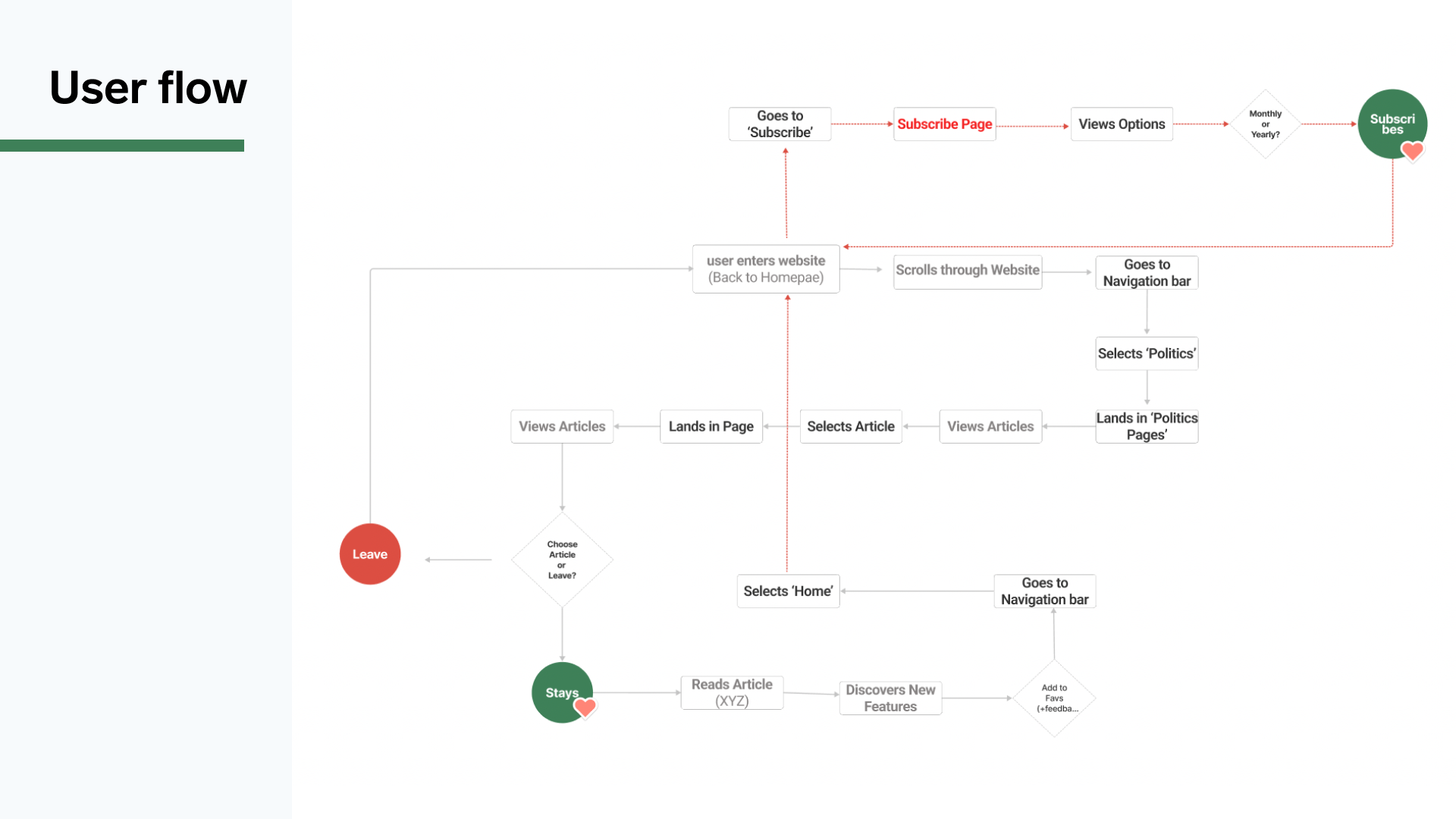
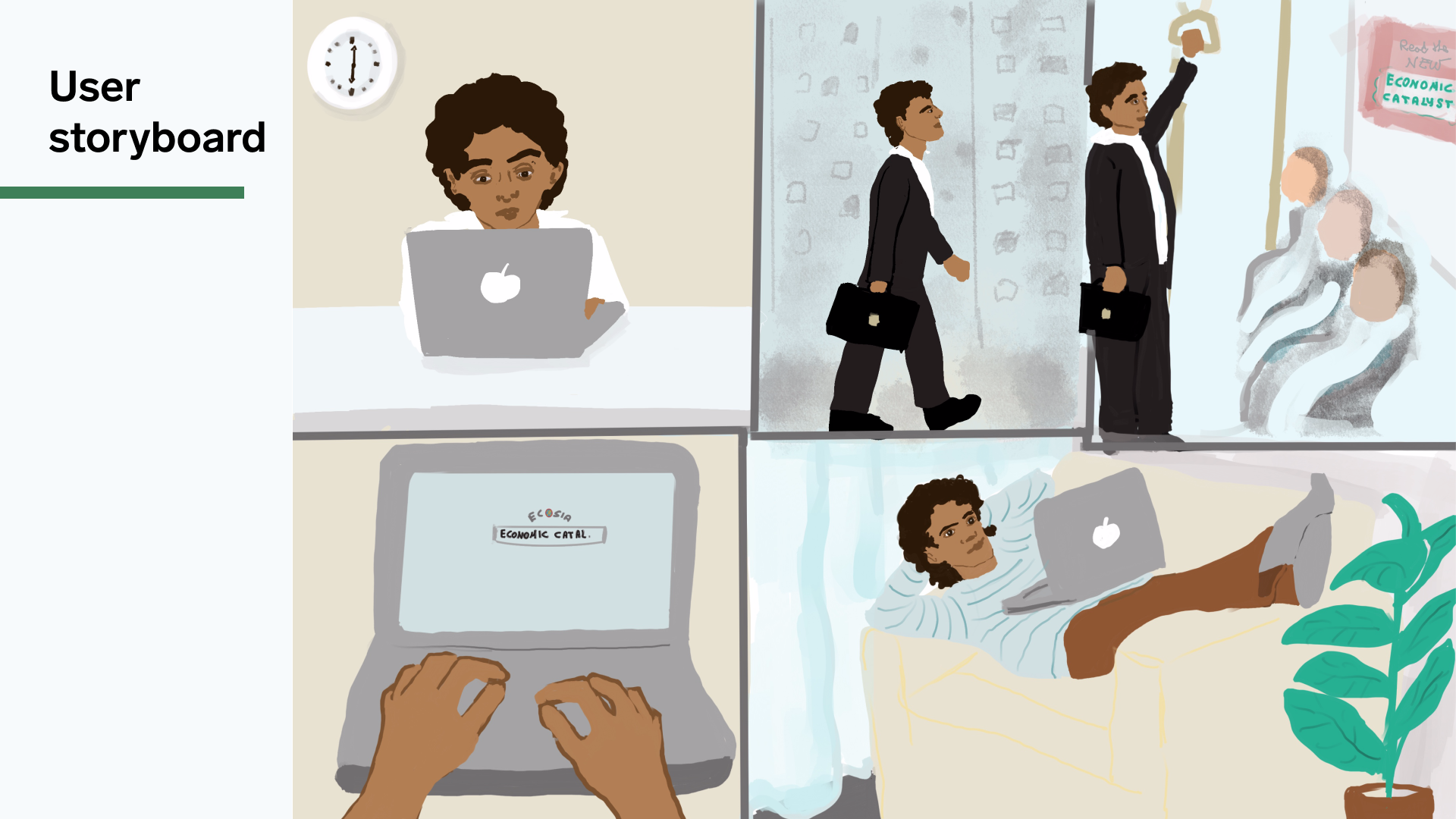
Our next step was to create our Sitemap. We ordered the website into topics and decided what we wanted to build in our prototype, like a subscription pop-up and a sign-in process. That would be shown in the User Flow. We also drew a storyboard, that showed how a potential reader could find out about our magazine.

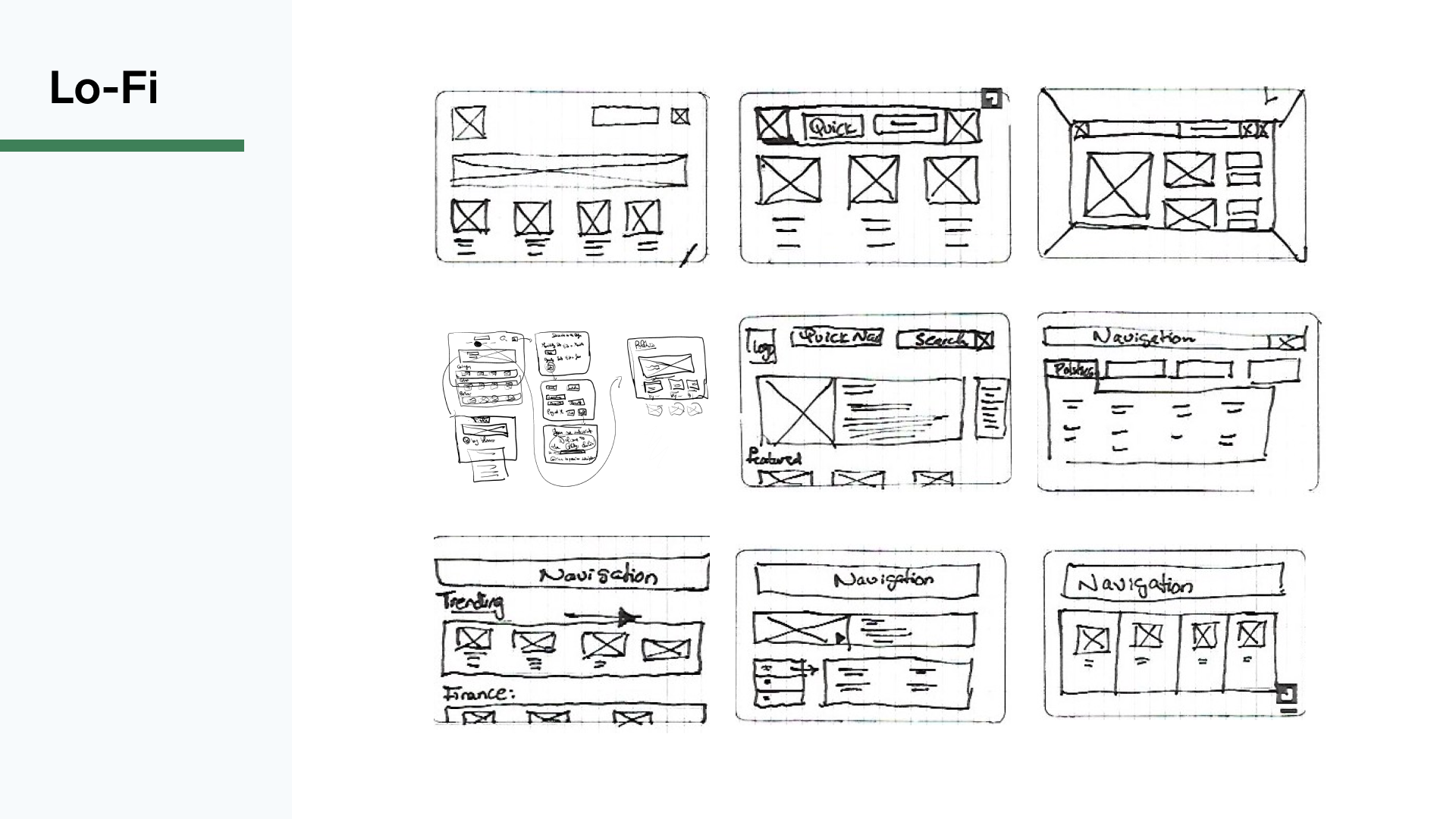
It was time to design our LO-Fi wireframes. We decided again to work on our own here, sketching our ideas, comparing our works at the end and then choosing what we thought would suit our product best.
Next step was to translate this into a defined project creating Mid-Fi wireframes. We knew that we wanted something for a young professional who regularly reads business magazines in the evening because he has interest in growing his business, but who is also not ready to spend too much on them. Since our persona had problems remembering what he read we decided to create a section in his personal profile where he can save not only his favourite articles, but also highlights of the most important things he read. The paid option also gives him the possibility to get notifications on articles about his favourite subjects.
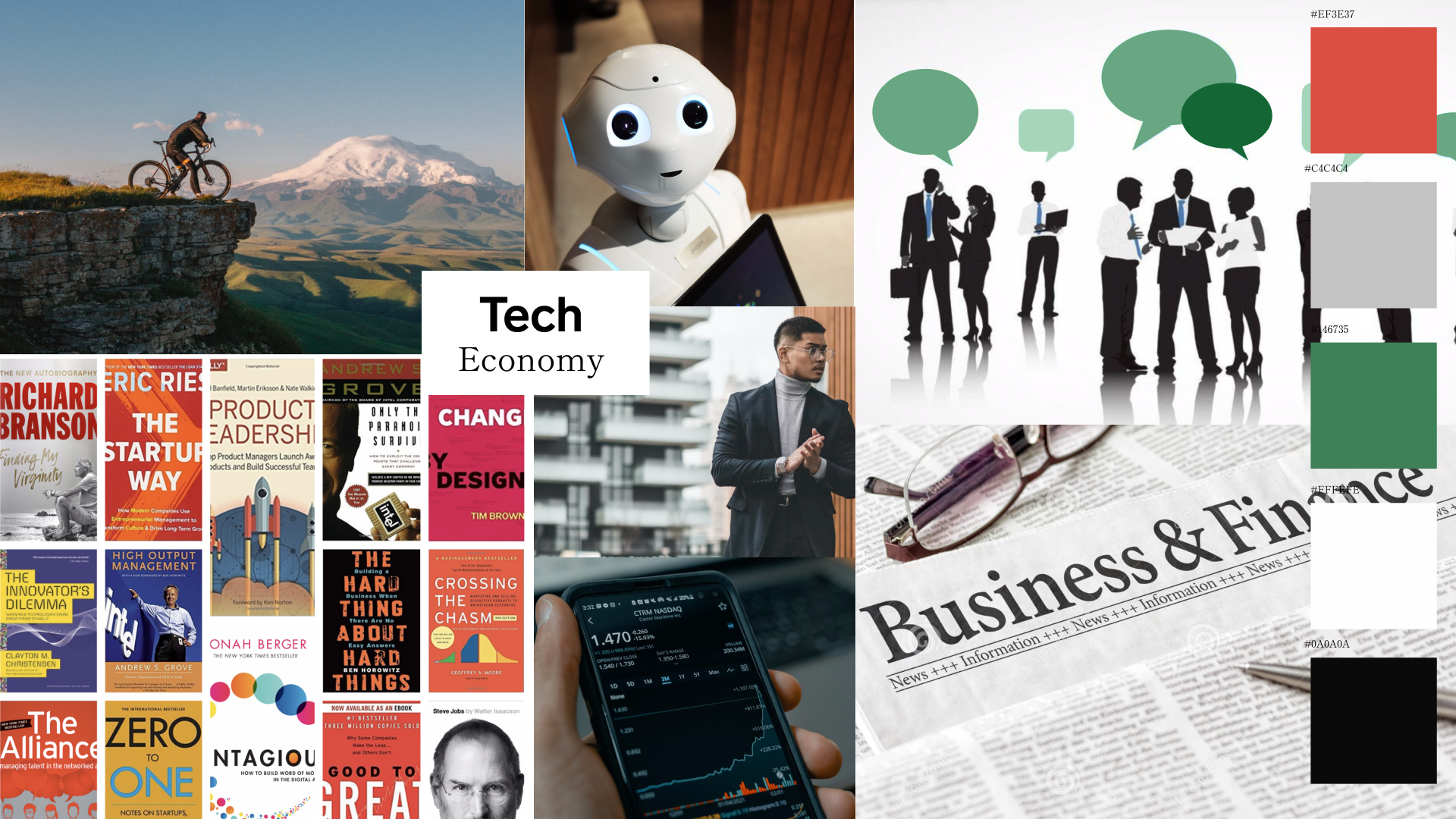
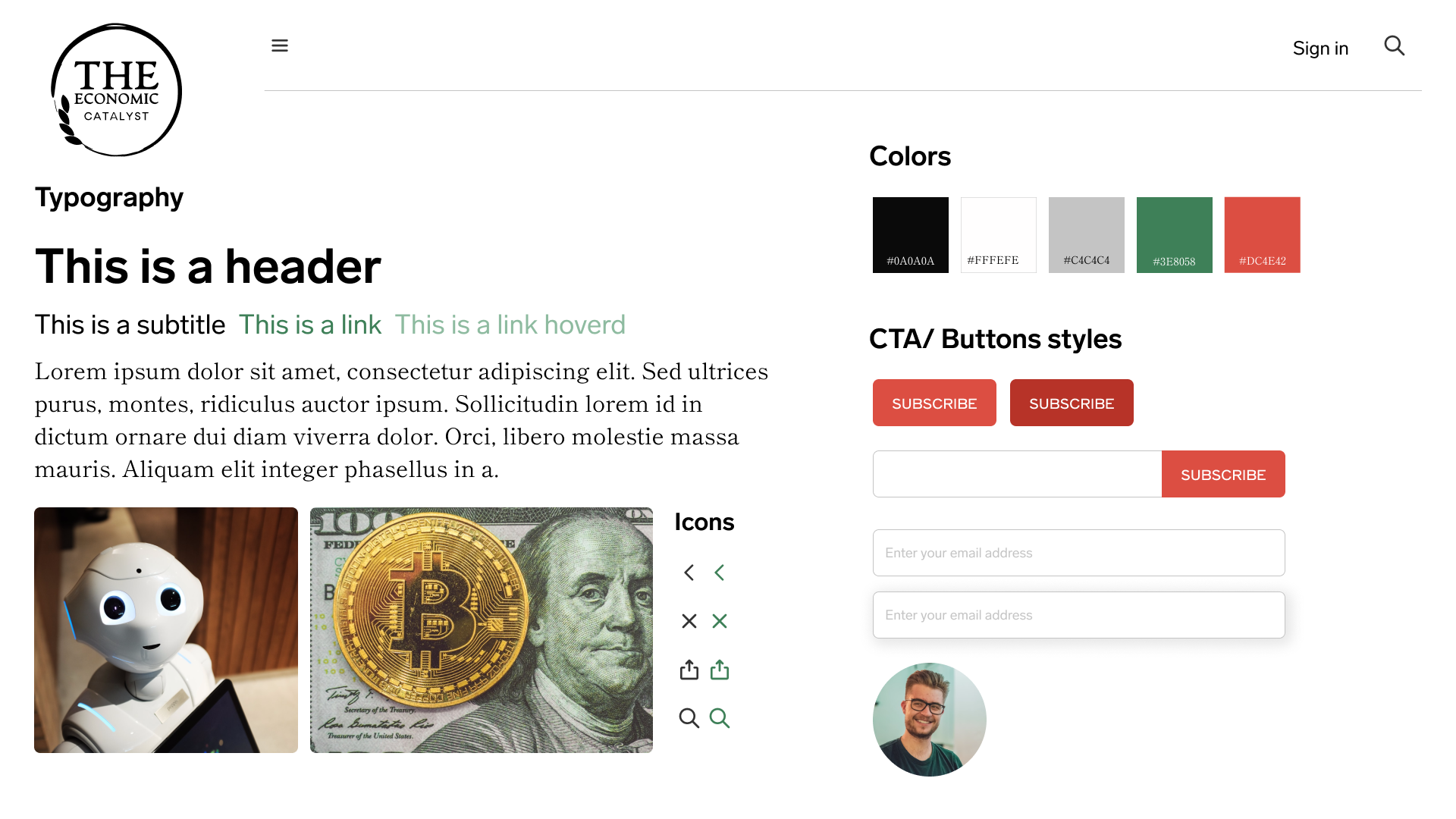
We then created a moodboard in order to give some “colour” to our ideas, which would be then used for the Hi-Fi. We actually crated three versions of a moodboard, because we wanted to have something that really fitted the feeling we wanted to give. We used it as inspiration to create the Style Tile for our website, which was our next step. We chose our colours, opting for green instead of the original ida we had, which was blue, just to make the magazine look a bit more “vibrant”.